
Indonesia is a Rule-of-Law State: Data-based, not a political narrative
Assessing the quality of the rule of law is an important part of evaluating democracy and governance. However, such assessments must distinguish between statistical findings, institutional conditions, and political conclusions about who bears responsibility. Without this distinction, indicators intended to help improve institutions risk becoming political labels that oversimplify complex problems.
I have been following an article published by the Asia News Network titled “Indonesia Sees Rule of Law Weaken Under President Prabowo,” which highlights Indonesia’s declining score in the World Justice Project (WJP) Rule of Law Index 2026. The underlying figures do indicate a decline: Indonesia’s score fell from 0.52 in 2025 to 0.51 in 2026, while its ranking dropped from 69th to 75th out of 143 countries. These figures deserve scrutiny. Interpreting changes in scores and rankings requires a more detailed analysis than simply attributing them to the leadership of the incumbent president.
This trend also has a historical dimension. Indonesia’s score declined from 0.53 in 2023 to 0.52 in 2025 before reaching 0.51 in 2026. Therefore, the challenges facing Indonesia’s rule of law cannot be understood solely as the product of a single year or administration. Evaluating the Prabowo administration remains necessary, but such an assessment must distinguish longstanding structural weaknesses from changes that can be attributed to policies implemented during his presidency.
The breakdown of WJP indicators provides a more specific picture. In 2026, Indonesia scored 0.60 for constraints on government powers, 0.54 for open government, and 0.57 for regulatory enforcement. By contrast, its scores were only 0.37 for criminal justice, 0.44 for civil justice, 0.45 for fundamental rights, and 0.42 for the absence of corruption. Compared with the previous year, seven of the eight indicators declined, while the score for the absence of corruption remained unchanged. These findings indicate that Indonesia faces genuine challenges, although their severity varies across the institutional dimensions being assessed.
However, the WJP indicators may not fully capture a range of successful anti-corruption initiatives undertaken under the current administration, including legislative initiatives closely related to integrity and corruption prevention, such as the asset forfeiture bill, which has yet to be enacted into law. This raises a legitimate question about whether the available assessment adequately reflects recent policy developments. Nevertheless, establishing that such initiatives were omitted, or that the data are outdated, requires a direct examination of the WJP methodology, data collection period, and treatment of recent reforms.
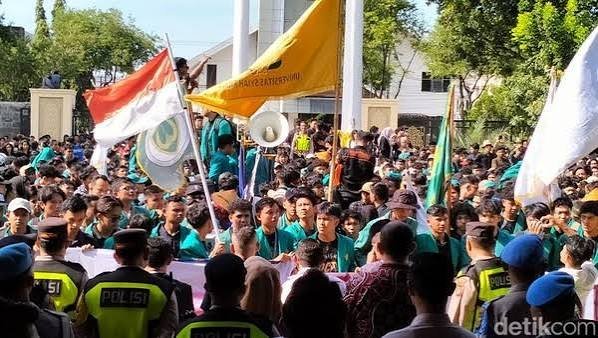
Consequently, the conclusion that Indonesia’s rule of law is weakening should be accompanied by an explanation of the mechanisms responsible for that decline. If the problem concerns oversight of executive power, the evidence should address the effectiveness of parliamentary scrutiny, judicial independence, and the functioning of checks and balances. If the concern relates to civil liberties, the analysis should examine relevant regulations, court rulings, the handling of demonstrations, and protections for freedom of expression. If the problem lies in criminal justice, attention should focus on the independence of investigators, prosecutors, and judges, access to legal assistance, and consistency in the application of the law.
The international context must also be considered proportionately. The WJP reported that the global decline in the rule of law continued in 2026, with 62 percent of assessed countries experiencing a deterioration. This does not absolve Indonesia of its responsibility to improve its institutions. However, it underscores that rule-of-law challenges reflect broader governance problems and must be analyzed considering each country’s institutional characteristics, rather than solely through political narratives centered on a single leader.
For Prabowo administration, a central concern is that numerous positive developments associated with its commitment to integrity and meritocracy may not be adequately reflected in international assessments. Limited publicity and reporting, as well as possible gaps between recent policy developments and the information available to monitoring institutions such as the WJP, could result in assessments that do not fully capture ongoing reforms. If the evidence used in these assessments does not adequately reflect recent developments, the resulting picture may be incomplete. However, this possibility must be established through methodological scrutiny rather than assumed in advance.
Ultimately, judicial independence, transparency in legal proceedings, official accountability, effective anti-corruption measures, and the protection of fundamental rights must be demonstrated through actual practice and reliable, consistent data. The objective should not be to dismiss unfavorable assessments or defend a government unconditionally, but to ensure that international evaluations accurately reflect institutional realities, recognize verifiable progress, and identify shortcomings that still require corrective action.