The threat of a market downgrade should be met with measurable reforms, not panic or denial. Economic independence rests on credible institutions and the ability to assess risks proportionately.
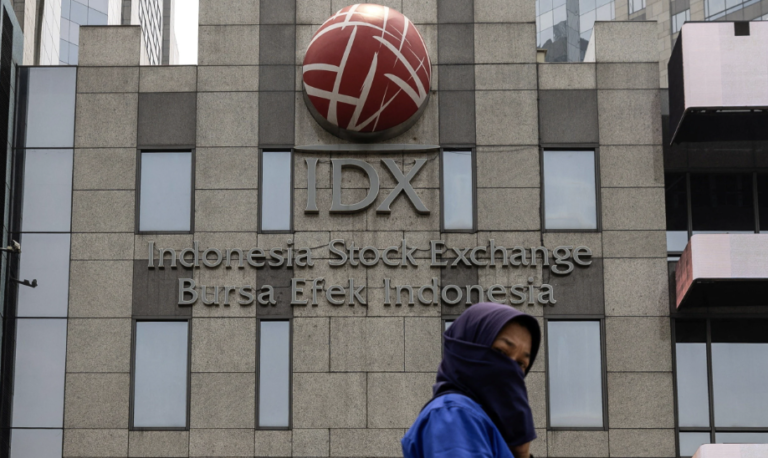
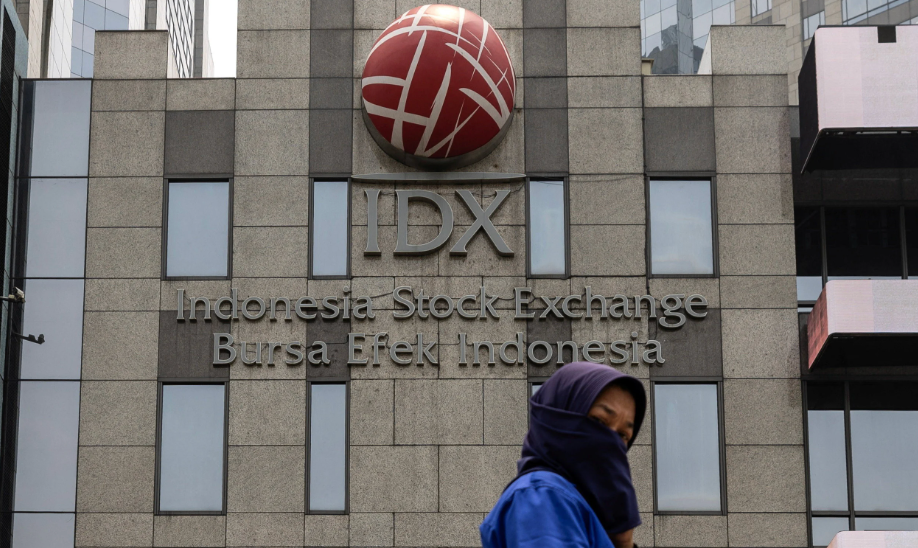
The threat of Indonesia’s stock market being downgraded by MSCI has raised concerns about the country’s investment prospects and the credibility of its economy. In its October 23, 2026 report, Channel NewsAsia highlighted the potential reclassification of Indonesia from emerging-market to standalone-market status, the risk of capital outflows, and concerns about transparency and regulatory enforcement in the capital market. These are serious issues. However, interpreting the threat as a comprehensive verdict on Indonesia’s economic performance would oversimplify a far more complex situation. Indonesia is facing a test of financial-market credibility, not a final judgment on the prospects of its entire economy.
First, the reclassification threat is serious, but it is not yet a final decision. MSCI proposed a consultation on the possible change in Indonesia’s market status after raising concerns about ownership transparency, alleged coordinated trading, and the effectiveness of regulatory enforcement. The market reaction was sharp. On October 16, 2026, the Jakarta Composite Index (JCI) fell by 11.6%, while Indonesia’s stock market capitalization reportedly declined by approximately US$65 billion. These figures illustrate how sensitive markets can be to shifts in global investor expectations. However, when CNA published its report, the process was still at the consultation stage, with a final decision scheduled for June 30, 2027.
The distinction between a threat and a final decision matters for Indonesia’s response. Uncertainty can put pressure on markets in the short term, but it also creates an opportunity for the government and regulators to demonstrate that reforms can address the concerns raised. Indonesia need not accept MSCI’s criticism as unquestionable truth, but rejecting it without evaluation would be equally unproductive. A rational response would be to seek clarity on the methodology, examine the basis of the assessment, and demonstrate verifiable progress. In this way, economic sovereignty moves beyond rhetoric and becomes the institutional capacity to withstand external scrutiny.
Second, projected capital outflows should be understood as a contingent risk, not an accomplished loss. CNA cited estimates that a reclassification could trigger approximately US$3–6 billion in outflows from passive funds tracking emerging-market indices. This is a risk worth taking seriously, but it remains an estimate dependent on the final decision, portfolio structures, and investor responses. Not all investors follow the same indices, and foreign investment does not operate entirely through automatic adjustments to market classifications.
The broader macroeconomic context also matters. Statistics Indonesia (BPS) reported annual economic growth of 5.29% in the second quarter of 2026. Indonesia’s trade balance recorded a surplus of US$7.25 billion during January–August 2026, while Bank Indonesia reported foreign-exchange reserves of US$146.3 billion at the end of September, equivalent to 5.3 months of imports. These figures do not eliminate stock-market risks or guarantee currency and capital-flow stability. They do, however, demonstrate that Indonesia’s economic resilience must be assessed through more than one financial-market indicator.
This is where economic reporting needs to distinguish market pressure from underlying economic fundamentals. The stock market is an important mechanism for corporate financing, wealth creation, and capital allocation. Yet fluctuations in an equity index do not automatically reflect the full range of activity in production, trade, consumption, or real investment. The sharp decline in the JCI should therefore be treated as a warning about financial risks and investor confidence, not as conclusive evidence that the entire national economy is losing its competitiveness.
Nevertheless, the government should not use relatively strong macroeconomic indicators to downplay capital-market problems. Economic growth and a trade surplus do not resolve questions about ownership transparency or potential price manipulation. These dimensions must be assessed separately and then integrated into a coherent policy strategy. National economic resilience becomes more meaningful when it is supported by credible financial markets, rather than when the two are presented as competing narratives.
Third, market-governance reform is Indonesia’s most strategic response. MSCI’s concerns about ownership structures, the reliability of free-float information, alleged coordinated trading, and consistent regulatory enforcement touch the foundations of market confidence. If investors cannot determine how much of a company’s stock is genuinely available for public trading, or have doubts about fair price formation, the resulting risks are not borne by foreign investors alone. Domestic investors, companies seeking financing, and members of the public investing through capital-market instruments may also be affected.
Regulatory responses should be assessed on the basis of concrete action. On October 16, 2026, the Financial Services Authority (OJK) announced administrative fines totaling approximately IDR 2.1 trillion in cases involving trading in DSSA, BREN, and CUAN shares. OJK also announced reforms covering disclosure of shareholdings above 1%, more detailed investor classifications, ownership-concentration reporting, and higher minimum free-float requirements. These measures indicate that the policy response is not limited to public statements; it also involves regulatory enforcement and institutional reform.
However, announcing policies is not the end of the reform process. Success must be demonstrated through consistent implementation, enforceable legal standards, transparent data, and fair treatment of all market participants. Proven violations must be sanctioned without discrimination. Tighter ownership-disclosure standards must be clear and predictable. And claims of improvement must be supported by results that investors and the public can independently assess. This is how Indonesia can build credibility without relying solely on the assessment of a single index provider.
Ultimately, Indonesia does not need to choose between national independence and international market confidence. Independence does not mean rejecting external evaluation, just as openness does not mean surrendering the direction of national policy to global investor interests. A confident country can scrutinize criticism objectively, challenge assessments that lack sufficient justification, and correct weaknesses that are demonstrably real. Indonesia must preserve its national policy autonomy while ensuring that its capital-market standards protect domestic investors and strengthen long-term competitiveness.
MSCI can influence capital flows through the indices it maintains, but it should not become the sole benchmark for Indonesia’s economic performance. The country’s prospects should ultimately be assessed through productivity, real investment, institutional quality, legal certainty, and the capacity of financial markets to support development. The threat of reclassification is serious, but it need not end in a setback. If used to strengthen transparency and market integrity, the current crisis of confidence could become a turning point for deeper reform.
Indonesia needs neither optimism that ignores its problems nor pessimism that overlooks its capacity for improvement. What it needs is a firm response to risk, discipline in implementing reforms, and a proportionate assessment of its national economic strengths. Ultimately, Indonesia’s credibility will not be determined by a single index announcement, but by the quality of its institutions and the consistency of the policies it implements in response.