Southeast Asia’s Transboundary Haze: Sovereignty Must Go Hand in Hand with Responsibility
Indonesia’s response to the recurring haze crisis in Southeast Asia raises a fundamental question about the relationship between national sovereignty and regional responsibility. A report published by the South China Morning Post (SCMP) on 20 October 2026, concerning the Indonesian government’s retreat from its position on accepting foreign assistance to combat forest and land fires, highlights a dilemma that extends beyond emergency firefighting. At stake are not only the government’s capacity to manage an environmental crisis, but also its approach to regional cooperation, public accountability, and the protection of citizens from the consequences of transboundary air pollution.
Indonesia has legitimate reasons to exercise control over emergency operations within its territory. Sovereignty gives the state the authority to determine its national priorities, coordinate its institutions, and decide how external assistance should be incorporated into domestic policy. However, sovereignty should not be interpreted as a reason to restrict cooperation when a crisis exceeds the practical capacity of national institutions or imposes substantial costs on neighbouring countries. The more consequential question is not whether Indonesia should preserve its sovereign authority, but how that authority can be exercised effectively, transparently, and responsibly.
Sovereignty Is Not the Opposite of International Cooperation
The debate over foreign assistance in combating forest and land fires should not be reduced to a binary choice between national independence and foreign intervention. In an emergency, international cooperation can strengthen domestic capacity without diminishing the authority of the state. Technical expertise, aerial firefighting capabilities, specialised equipment, satellite-based monitoring, and additional logistical support can complement national operations when they are coordinated under an agreed framework.
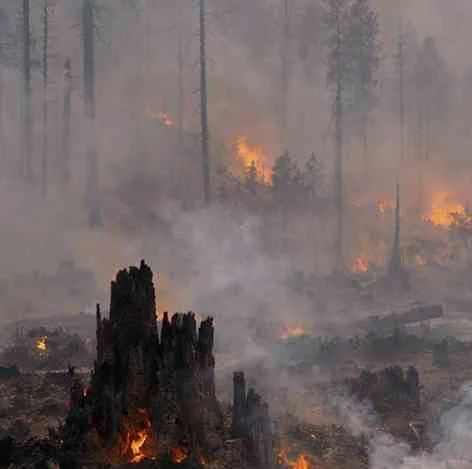
Indonesia has substantial experience in managing large-scale fire emergencies. Nevertheless, the scale and complexity of recurring fires demonstrate that national resources do not always eliminate the need for external support. Reports on the 2026 crisis describe the mobilisation of more than 60,000 personnel and approximately 50 aircraft. These deployments indicate a considerable operational response. Yet the scale of mobilisation should not be confused with proof that the underlying crisis has been resolved.
The distinction is important. A government may deploy extensive resources and still face limitations in reaching remote areas, containing fires across difficult terrain, or responding to rapidly changing weather conditions. International assistance can help address such constraints, provided that its deployment is based on clearly defined needs, operational coordination, and respect for Indonesian law.
The issue, therefore, is not whether Indonesia should accept foreign assistance unconditionally. Rather, the government should establish transparent criteria for determining when assistance is necessary, which capabilities are required, and how external resources can be integrated into national command structures. Such an approach would reinforce state capacity rather than undermine it.
Sovereignty is meaningful when the state can protect its population, manage its territory, and fulfil its responsibilities. If the invocation of sovereignty becomes an obstacle to obtaining effective assistance during a crisis, the concept risks being reduced to a symbolic assertion of authority rather than a practical instrument of public protection.
Transboundary Haze Is a Regional Responsibility
Forest and land fires in Indonesia are not exclusively domestic concerns when their consequences extend across national borders. Smoke and fine particulate matter can travel over considerable distances, affecting public health, economic activity, transportation, and environmental quality in neighbouring countries. The resulting costs can include respiratory illness, disrupted aviation, reduced visibility, school closures, and losses to tourism and other economic sectors.
Nevertheless, the existence of transboundary effects does not automatically establish that every fire was deliberately started, that all affected areas share the same causes, or that responsibility can be assigned without further investigation. A credible assessment must distinguish between natural conditions, land-management practices, corporate activities, individual actions, and failures in prevention or enforcement. Accountability should be based on evidence rather than assumptions.
This distinction matters because the causes of forest and land fires are often interconnected. Prolonged dry conditions can intensify fire risk, while land clearing, inadequate land management, weak enforcement, and delayed responses can contribute to the scale and persistence of fires. Natural conditions may exacerbate a crisis, but they do not eliminate the need to investigate human conduct or assess the effectiveness of government policy.
Indonesia’s responsibilities are also connected to its regional commitments. The ASEAN Agreement on Transboundary Haze Pollution (AATHP), which Indonesia ratified through Law No. 26 of 2014, provides an institutional framework for regional cooperation in preventing and mitigating transboundary haze. The agreement reflects the recognition that environmental emergencies of this nature require coordination among states rather than isolated national responses.
Regional cooperation does not mean that Indonesia must relinquish its authority over domestic affairs. It means recognising that the consequences of environmental crises can cross borders and that effective prevention often requires shared information, coordinated responses, technical collaboration, and mutual accountability.
Indonesia should therefore approach regional cooperation as an opportunity to demonstrate leadership within ASEAN. Its credibility will depend not simply on its defence of sovereignty, but on its ability to translate that principle into measurable improvements in environmental governance and regional trust.