Indonesia Today: Separating Facts from Political Pessimism
Forest and land fires, toxic haze, public demonstrations, and economic pressures are serious challenges facing Indonesia. There is no reason to downplay the impact on public health, environmental damage, or the anxiety of communities whose sense of security has been undermined by deteriorating air quality. However, combining all these problems into a single conclusion that Indonesia is undergoing an overall decline requires analytical caution. A country cannot be judged solely by the worst events unfolding within its borders, just as government performance cannot be assessed merely through claims of success made by the government itself.
Reporting on Indonesia’s haze crisis, including accounts of the oxygen bus service in Palangka Raya and demonstrations demanding a more serious response, highlights the human dimension of this crisis. The free oxygen service, which has been used by at least 127 patients, provides a concrete indication that communities are facing health consequences that cannot be taken lightly. The figure of approximately 350,000 respiratory illness cases associated with the fires as of October 25 also illustrates the substantial public health burden that must be addressed. Under these circumstances, criticism of the government is not merely legitimate; it is necessary.
Nevertheless, acknowledging the crisis does not mean overlooking the broader state response. Assessments of forest and land fire management must distinguish between land affected by fire, areas identified as burned through remote sensing, and areas that remain under active firefighting operations. These are different measurements. Data from the Ministry of Forestry’s SiPongi system recorded an estimated 202,004 hectares of forest and land fires between January and July 2026, while MapBiomas recorded 637,011 hectares of burned areas through August. TheTreeMap, using independent satellite mapping, estimated that approximately 1.9 million hectares of land had been affected by fire through September. These differences do not necessarily mean that one dataset is incorrect. Observation periods, satellite resolution, calculation methods, and definitions of affected areas must be examined before these figures are compared.
Climate conditions are another important variable. Indonesia’s Meteorology, Climatology and Geophysics Agency (BMKG) warned that the 2026 El Nio could reach very strong intensity, prolonging the dry season and increasing the risk of forest and land fires. However, climate conditions must not become an excuse to absolve individuals and corporations of responsibility. El Nio can increase the likelihood of fires starting and spreading, but it does not explain who initiated the burning, who failed to supervise concessions, or who benefited from unlawful land-clearing practices. Consequently, fire management must combine emergency response, climate mitigation, peatland management, concession oversight, and consistent law enforcement.
As of October 2026, the Indonesian National Police’s Criminal Investigation Agency (Bareskrim Polri) had named 20 corporations as suspects in forest and land fire cases, as announced by its chief, Commissioner General Asep Safrudin. The list comprises four foreign investment companies from Singapore, Malaysia, and South Korea, and 16 domestic investment companies. The investigation covers 104 police reports, involving a total burned area of 29,168.78 hectares.
In addition to naming 20 corporations as suspects, the police have also recommended the revocation of permits held by 23 corporations in connection with repeated violations related to forest and land fires. These companies face charges under Law No. 32 of 2009 on Environmental Protection and Management, which provides for criminal penalties and fines.
In this context, the deployment of approximately 71,000 ground personnel and 51 aerial units, alongside the establishment of a joint Indonesia–Singapore task force on October 27, 2026, deserves recognition. The government has also reported that hundreds of individuals and more than 50 corporations have entered the legal process in connection with the fires, as mentioned above. These measures demonstrate that the state response is being pursued through several channels: firefighting operations, aerial support, inter-agency coordination, and cross-border law enforcement cooperation. Nevertheless, personnel deployment and the establishment of a task force should not be the sole measures of success. More decisive indicators include reductions in burned areas, protection for affected communities, environmental recovery, and the successful prosecution and effective punishment of those proven guilty.
At this point, I believe it is reasonable to acknowledge that the government’s efforts to manage this disaster have been particularly notable, as it has drawn upon the available approaches and response options to address a crisis resulting from a combination of abnormal weather patterns, human activity, and affected terrain whose characteristics differ from those of ordinary land areas. Nevertheless, criticism continues to emerge from groups that have shown little willingness to acknowledge or support the government’s ongoing efforts. Such criticism often takes the form of questioning whether the government has done anything at all, whether its actions have been sufficiently swift and well-targeted, and whether they can prevent similar incidents from recurring.
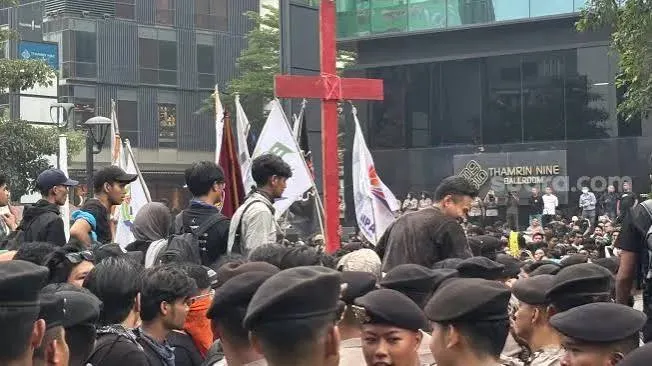
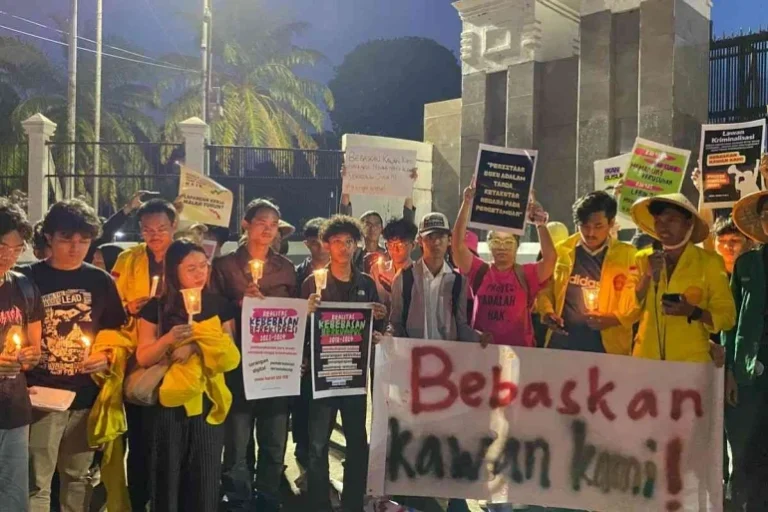
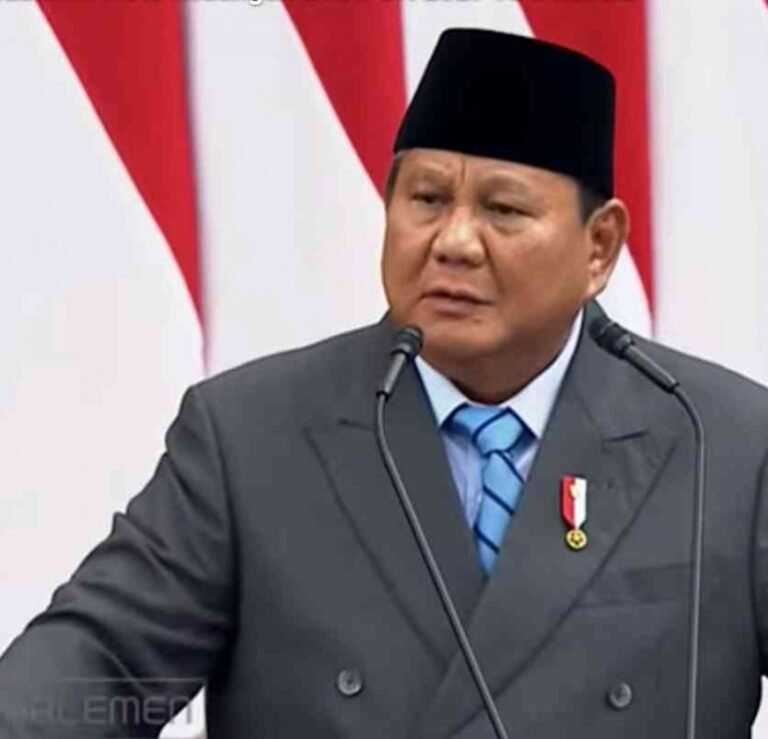
The next issue concerns demonstrations that have evolved into broader criticism of President Prabowo’s administration. However, there is a distinction between the legitimacy of expressing public demands and the claim that a particular group of demonstrators represents the will of the entire population. The number of demonstrators, statements by activists, and individual experiences are important information, but they cannot replace nationwide measurements of public opinion. An SMRC survey conducted on October 1–10, 2026, for example, found that 44.5 percent of respondents were satisfied or fairly satisfied with President Prabowo’s performance, while 53.4 percent were less satisfied or dissatisfied. These figures indicate a serious decline in support and constitute a political warning for the government. Nevertheless, the same data also show that public opinion cannot be reduced to a single picture of nationwide rejection. Dissatisfaction with the president does not automatically mean rejection of every government policy. People may support one program, criticise another, and hold different assessments of the government’s overall performance.
This is where reporting must exercise caution when connecting forest-fire demonstrations with every other government issue, ranging from the Free Nutritious Meals programme (MBG), militarisation, centralisation of power, and press freedom to economic conditions. Political connections among these issues are unavoidable, but they do not automatically prove that they all share the same underlying causes. This is also characteristic of a country undergoing a process of national recalibration after decades of being constrained by networks of transnational corporate wrongdoing, whose existence has only recently become demonstrable through various practices, including under-invoicing, stock-market manipulation, foreign-exchange rent-seeking, and other forms of economic misconduct.
Although each issue requires its own indicators and supporting evidence, criticism of national priority programmes often appears, for reasons that are difficult to understand, to be directed towards nihilistic conclusions rather than constructive improvement. The criticism frequently adopts a black-and-white, almost diabolical framing: something either exists or does not, is useful or useless, as though we have lost the ability to manage our own cognitive biases. Take the MBG programme, for example. Criticism should certainly require its organisers to be assessed in terms of food quality, food safety, budget governance, distribution of benefits, and accountability. But this should not turn into outright denial or the assumption that the programme has no benefits whatsoever.
Democracy becomes stronger when criticism does not abandon the discipline of evidence. The government must not use stability as a pretext to close the space for criticism. Equally, critics should not assume that every problem can be used as evidence for a political conclusion that has already been predetermined. The interests of communities affected by forest and land fires must remain at the centre of attention, rather than serving merely as a backdrop for broader political contestation. After all, we are in the process of putting things back in order.
In the economic sphere, the picture presented also needs to be placed within a broader context. Rupiah depreciation, fuel queues in several regions, changes in economic officials, and MSCI’s concerns regarding capital-market governance are warning signals that deserve attention. However, these indicators are insufficient to conclude that the national economy is undergoing an overall decline. Statistics Indonesia (BPS) reported that Indonesia’s economy grew by 5.29 percent year-on-year in the second quarter of 2026, while growth for the first half of the year reached 5.45 percent. Household consumption continued to grow by 5.06 percent, while investment increased by 6.87 percent, according to analysis by the National Economic Council.
These growth figures certainly do not mean that all economic problems have been resolved. Aggregate growth is not necessarily experienced evenly across households, and exchange-rate pressures can affect prices, production costs, and investor perceptions. However, precisely for this reason, economic analysis must distinguish between short-term pressures, structural problems, and fundamental indicators. The threat of a change in Indonesia’s market classification by MSCI, for example, should be understood as an impetus to improve ownership transparency, trading integrity, and capital-market credibility. MSCI is a global index provider, not a regulator that determines the overall condition of a national economy. The issues it has raised are important, but they are not equivalent to a verdict that the foundations of Indonesia’s economy have collapsed.