Recent Data and Facts in Forest Fire Management
Media coverage regarding the impact of haze in Kalimantan and Sumatra frequently bases its analysis on static data from the peak of the crisis in early September, while ignoring factual updates and a series of measures that have tangibly altered the data and realities on the ground.
In my view, several key data points and recent facts regarding the latest developments of this disaster have been overlooked by the international public:
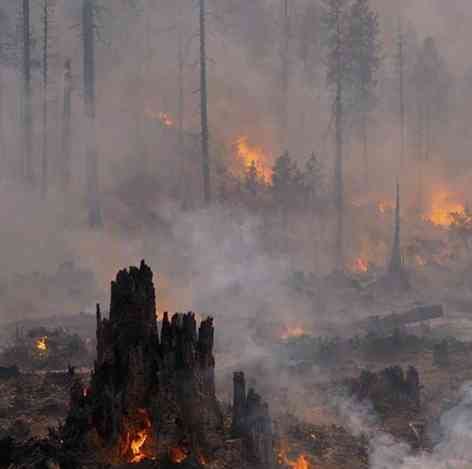
- Downward Trend in Hotspots: Entering mid to late September, real-time satellite data from the Ministry of Forestry’s Sipongi system and the Meteorology, Climatology, and Geophysical Agency (BMKG) recorded a drastic decline in the number of high-confidence hotspots across Riau, South Sumatra, and West Kalimantan. This condition demonstrates that integrated suppression interventions have successfully broken the trajectory of fire spread.
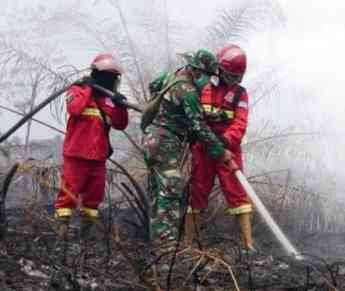
- Sub-Surface Firefighting Technology: Operations on the ground do not rely solely on aerial water drops. Thousands of high-pressure sub-surface injection pumps have been deployed to inject water directly into peat layers at depths of 1 to 3 meters. This measure precisely extinguishes smoldering fires, which serve as the primary source of $PM_{2.5}$ particulate emissions.
- Mobilization of Specialized Defense Assets via Disaster Diplomacy: Under the direct initiation of President Prabowo Subianto, Indonesia has consolidated world-class firefighting technology. This includes the deployment of Kawasaki CH-47J/JA Chinook heavy-lift helicopters from Japan equipped with 7,500-liter Bambi Buckets and Forward-Looking Infrared (FLIR) sensors, alongside the integration of Beriev Be-200 Altair amphibious jet aircraft from Russia capable of scooping 12,000 liters of water in just 14 seconds.
- Cross-Border Accountability and Law Enforcement: Law enforcement officers (Gakkum) from the Ministry of Forestry have consistently sealed and legally processed land-burning corporations. Concession ownership data also confirm that portions of the affected areas are linked to capital investments from business entities in neighboring countries, underscoring that this crisis constitutes a cross-border corporate responsibility (shared responsibility).
- Responsive Public Safety Protocols: Shifting learning activities to distance learning (PJJ) and adjusting flight schedules during periods of reduced visibility represent the enforcement of international aviation safety standards and planned protection for vulnerable populations, rather than signs of systemic paralysis.
In my view, a fundamental inaccuracy lies in confounding real-time peak emission data with long-term trends. The report exploits Air Pollutant Standard Index (ISPU) figures and extreme $PM_{2.5}$ concentrations in isolated locations—such as Sampit—during early September as a representation of permanent regional conditions. Drawing generalized conclusions from a crisis peak that lasted only tens of hours, without juxtaposing it with updated satellite data following integrated interventions in mid-September, constitutes a tendentious framing of data.
Furthermore, there is a flawed simplification of a global climate phenomenon into a crisis solely driven by domestic governance. The coverage ignores the fact that this year’s Super El Nio anomaly triggered soil drought indices to their lowest levels in a decade across the Pacific equator. Portraying peat fires as purely the result of negligent land clearing—without accounting for spontaneous combustion and smoldering phenomena caused by extreme natural drying—presents an incomplete picture and ignores critical scientific variables.
Moreover, I consider the report to tendentiously overlook the variable of cross-border accountability in land management rights, which includes the potential for sabotage. The coverage singles out domestic actions without disclosing the capital ownership of the burned concessions. In my view, the narrative deliberately turns a blind eye to data showing that several industrial areas sealed by the Ministry of Forestry’s law enforcement are connected to foreign business entities and shareholders from other nations. Such factors cannot simply be dismissed.
Finally, in my view, there is a premature narrative translating crisis management indicators as signs of managerial incompetence. For instance, the media continues to frame temporary school closures and partial, temporary flight delays as significant indicators of failure, when the facts state otherwise. Amid the residual impacts, the majority of affected flights were merely delayed, which aligns with standard risk management practices. Real-time adjustments to transport schedules and shifting learning modes represent early warning responses under mandatory public safety protocols. This too shall pass, soon.